Skip to content
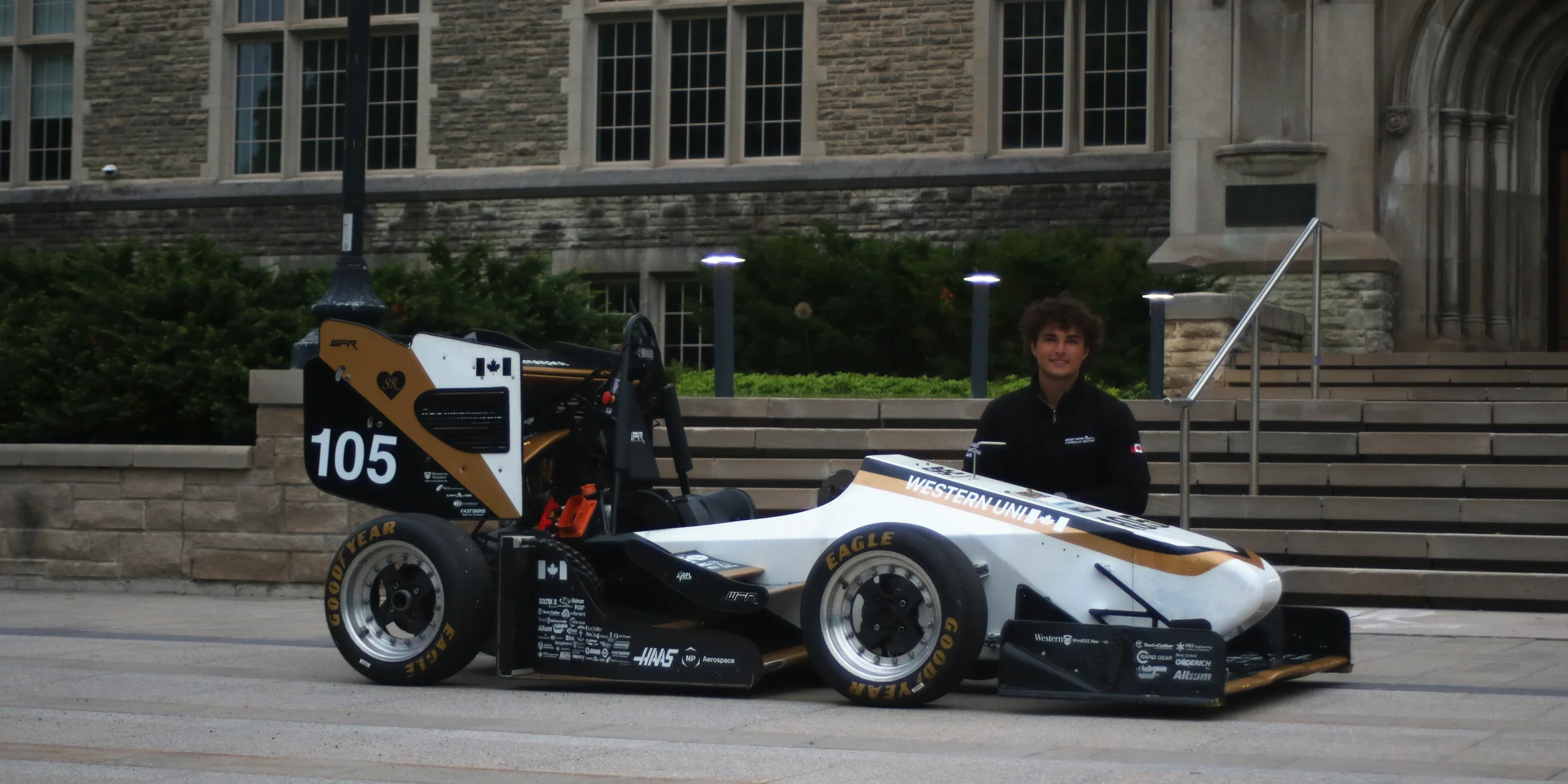
The 2026 car from the front three-quarter outside University College: front wing, side wings and rear wing

Subsystem 01 of 13

Aerodynamics

A multi-element package of nosecone, front wing, side wings, rear wing and diffuser, built in-house with carbon fibre/glass composites and Rohacell foam core internal structures.

Our capabilities

Profile
Selig 1223 and NACA 6412
Lift coefficient
CL 1.8. Validated by Ford's DTF Wind Tunnel.
Drag coefficient
CD 0.77. Validated by Ford's DTF Wind Tunnel.
Aero balance
CoP 53% to the front.

Aerodynamics

Design. Simulate. Manufacture.
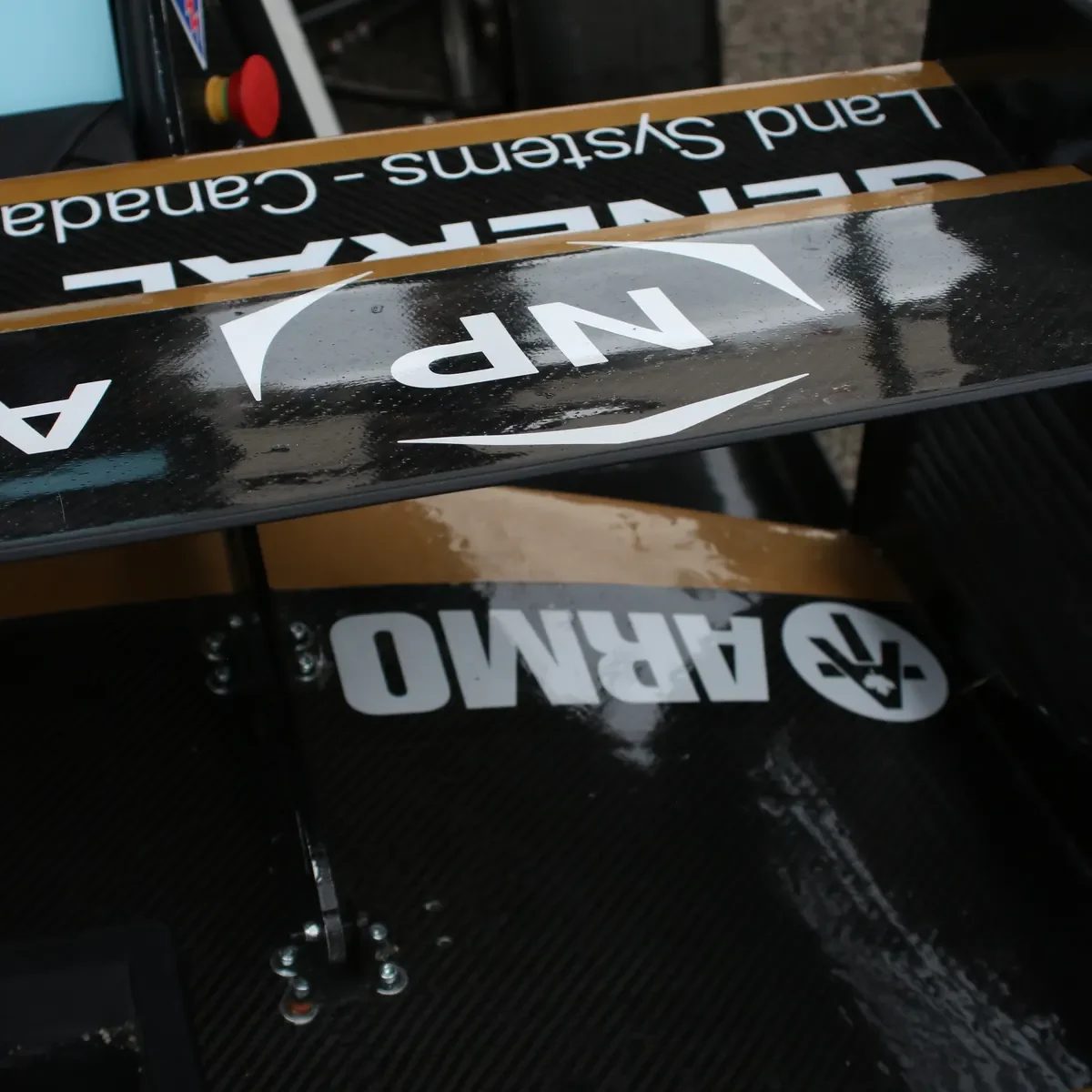
Carbon wing elements of the 2026 car at Formula SAE Michigan, sponsor names across them
  1. 01

    Integrated with cooling subsystem

    The side wing houses the radiator, placed on the right side for higher average endurance airflow.

  2. 02

    Weight reduction

    Evaluating bonding adhesives and refining part preparation brought significant weight reductions.

  3. 03

    500N Downforce

    The WFR20-E features front, side and rear wing elements as well as a diffuser that produce 500 N of downforce @60 km/h.

  4. 04

    Live downforce

    A pitot tube works in tandem with linear potentiometers on the dampers to give live downforce numbers on track. Both are calibrated in the wind tunnel.
Carbon wing elements of the 2026 car at Formula SAE Michigan, sponsor names across them

WFR26E

The assembly

Drag to turn

Element by element

How each part of the WFR26-E package works, from the front of the car to the back.

  • The primary element is a low-lift airfoil that makes its downforce through ground effect. It is the most efficient aerodynamic part of the car, because all of the air reaching it is clean, undisturbed freestream air.
  • The flagpoles shed vortices that push the front tyres' wake away from the side wings.
  • The secondary elements carry air over the wheels and suspension and guide it toward the lifting wings.
  • The secondary elements use the Selig 1223, an airfoil that makes plenty of lift but is poor at guiding air, so it disturbs the flow reaching the elements behind the front wing. That is changing for 2027.
  • The endplates are meant to turn freestream air away from the wheels before it reaches them.
  • The curved tip of each endplate sheds a vortex that trails back along the car and seals off the air underneath, keeping disturbed air out of the ground-effect flow under the side wings and chassis.

  • The lifting wings push the air coming off the front wing's secondary elements back down onto the side wings.
  • Like the flagpoles, the winglets on the sides of the lifting wings shed vortices that guide the tyre wake away from the rear wing and side wings.
  • The floating wings send air up to the rear wing and add some downforce of their own.
  • The side wing primaries make downforce through ground effect.
  • The right side wing's endplate houses the radiator, placed where, in theory, the air is least disturbed, so it can take in as much air as possible.
  • Every other element shares one job: sending air up to the rear wing.

  • The rear wing is a cascade of elements rather than one large airfoil, to avoid flow separation.
  • High-pressure air from the pressure side of the primary bleeds through the gap to the next element and onto its low-pressure suction side. That re-energizes the boundary layer on that element and delays separation, which is why the upper elements can be set nearly vertical.
  • Together, the three elements make the majority of the car's rear downforce.
  • The primary collects the air and starts it up the cascade, and the secondary elements behind it take that air and continue the cascade.
  • The secondary elements directly behind the TSSI send the air in a similar direction to the main airfoils beneath them, so freestream air does not disrupt the wake.

  • The diffuser is where the air under the car leaves it, through a channel whose cross-section grows toward the back.
  • As the channel grows, the air slows down and its pressure rises back toward that of the air around the car.
  • Recovering that pressure at the exit lets the air underneath run faster and at lower pressure. The difference between that low pressure under the car and the higher pressure above it pushes the car down onto the track.
  • It works best with clean, sealed flow under the car, which the front wing's endplate vortices help to protect.

Changing for 2027

Fully redesigned aero package
Getting rid of side wings
Introducing an undertray to maximize ground effect
Carbon fibre rear wing swan mounts
Carbon fibre front wing mounts
R&D on prepreg materials and composite moulds
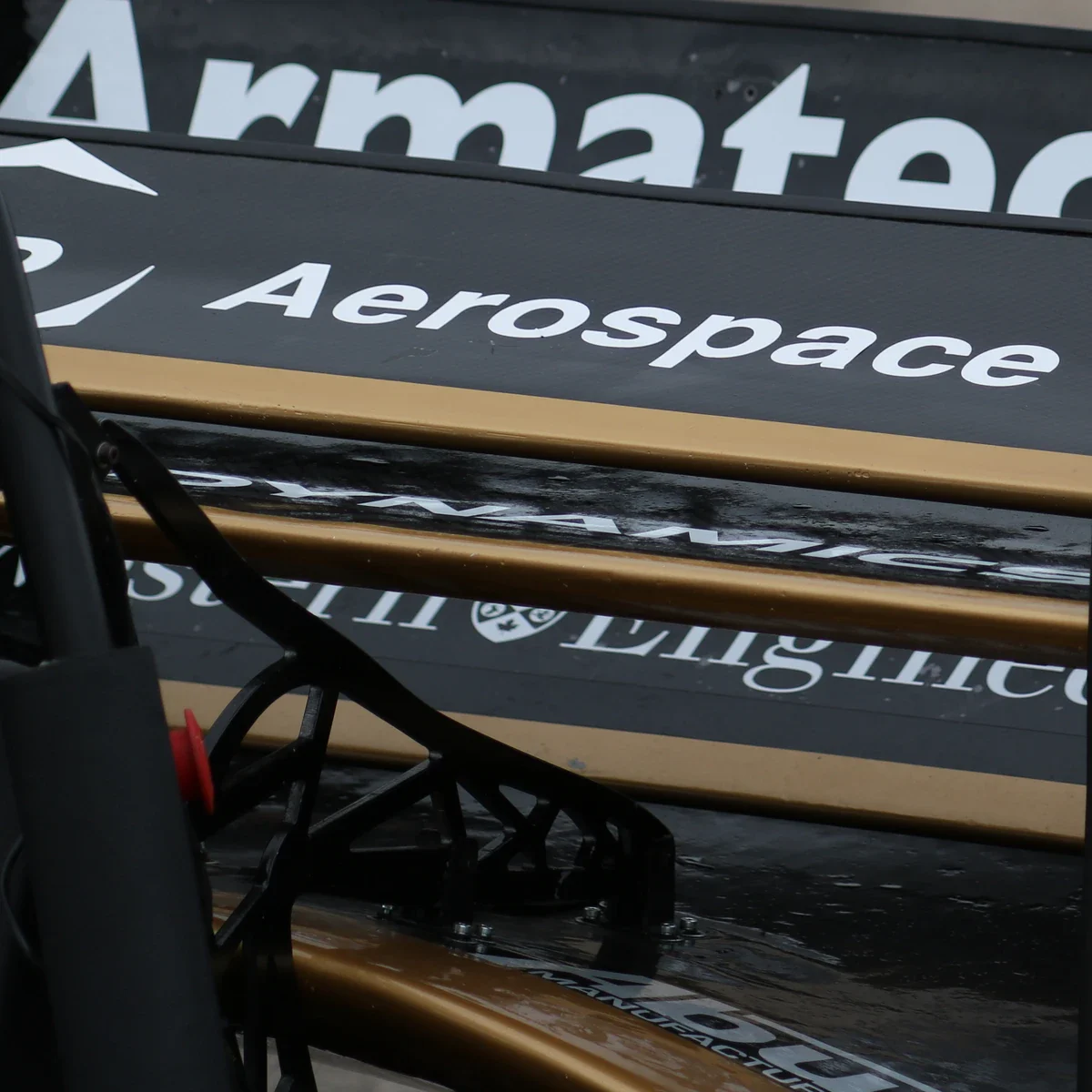
The rear wing of the 2026 car, Armatec and NP Aerospace on its elements, at Formula SAE Michigan

In the making

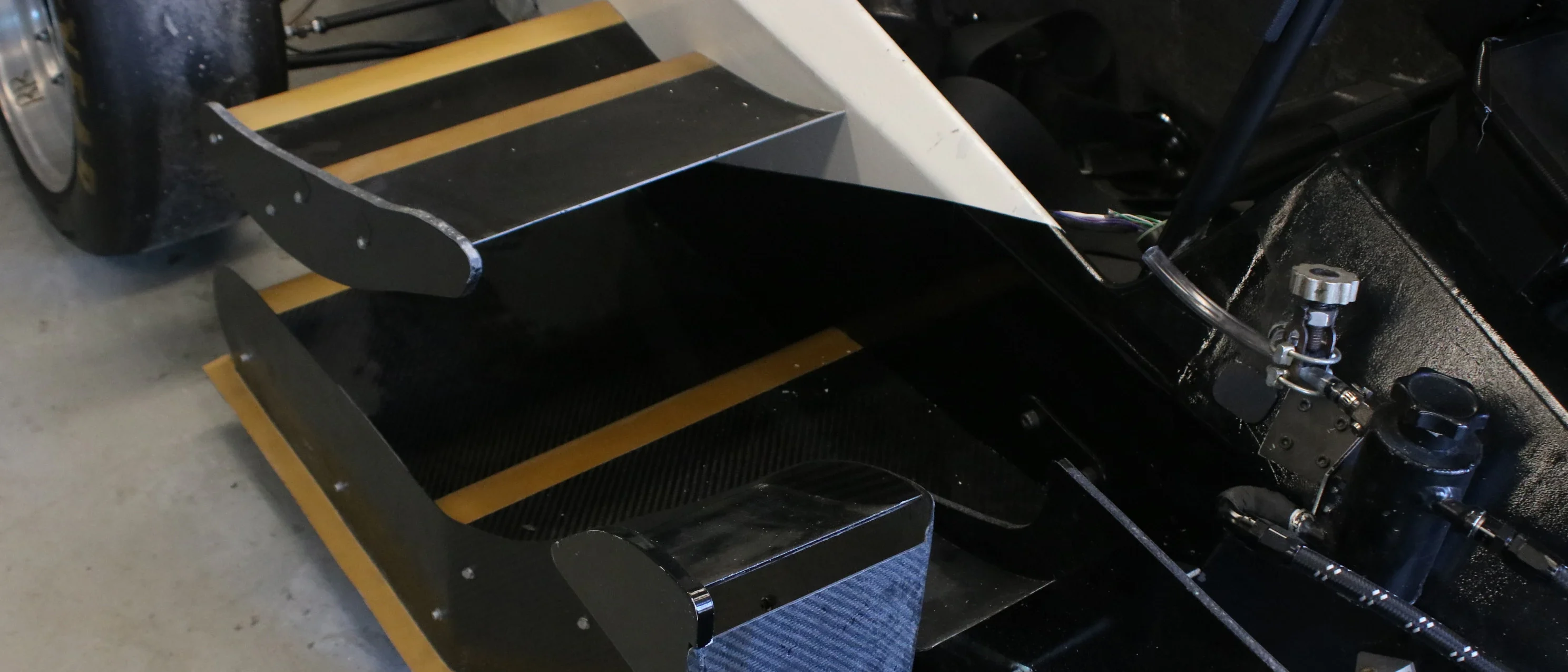
Wing elements and endplates of the 2026 car in the shop at Centralia, April 2026

How it works

The side wings were the main focus: they were reworked to add downforce, cut drag and keep dirty air off the tyres, and the side wing houses the radiator.

The team already has pre-machined cores and moulds in that airfoil, and the other elements use the NACA 6412.

Ten extra 3D printed elements replaced infusions, saving roughly 60 infusion hours and 20 sanding hours, and new jigs made cutting and locating repeatable.

Speed, yaw and ride height sweeps were run with elements removed one at a time, and the tunnel validated a lift coefficient of 1.8 and a drag coefficient of 0.77.

WFR26E, car 105, side-on on a stone plaza in front of stone steps, a team member standing behind it

Build the next one.

Recruitment is open. You do not need to be an engineer or know anything about racing. Bring your curiosity and we will teach you the rest.

Get in touch
Join us

Shopping bag