Skip to content
The dampers and rocker of the 2026 car, Centralia, April 2026

Subsystem 12 of 13

Suspension

Controls the race car's motion to maximize tire grip and achieve the fastest lap times possible.

Our capabilities

Wheelbase
1550mm
Type
Decoupled heave and roll
Anti-dive / anti-squat
10% / 10%
Ride height
40 mm design

Suspension

Maximize grip, maximize speed.
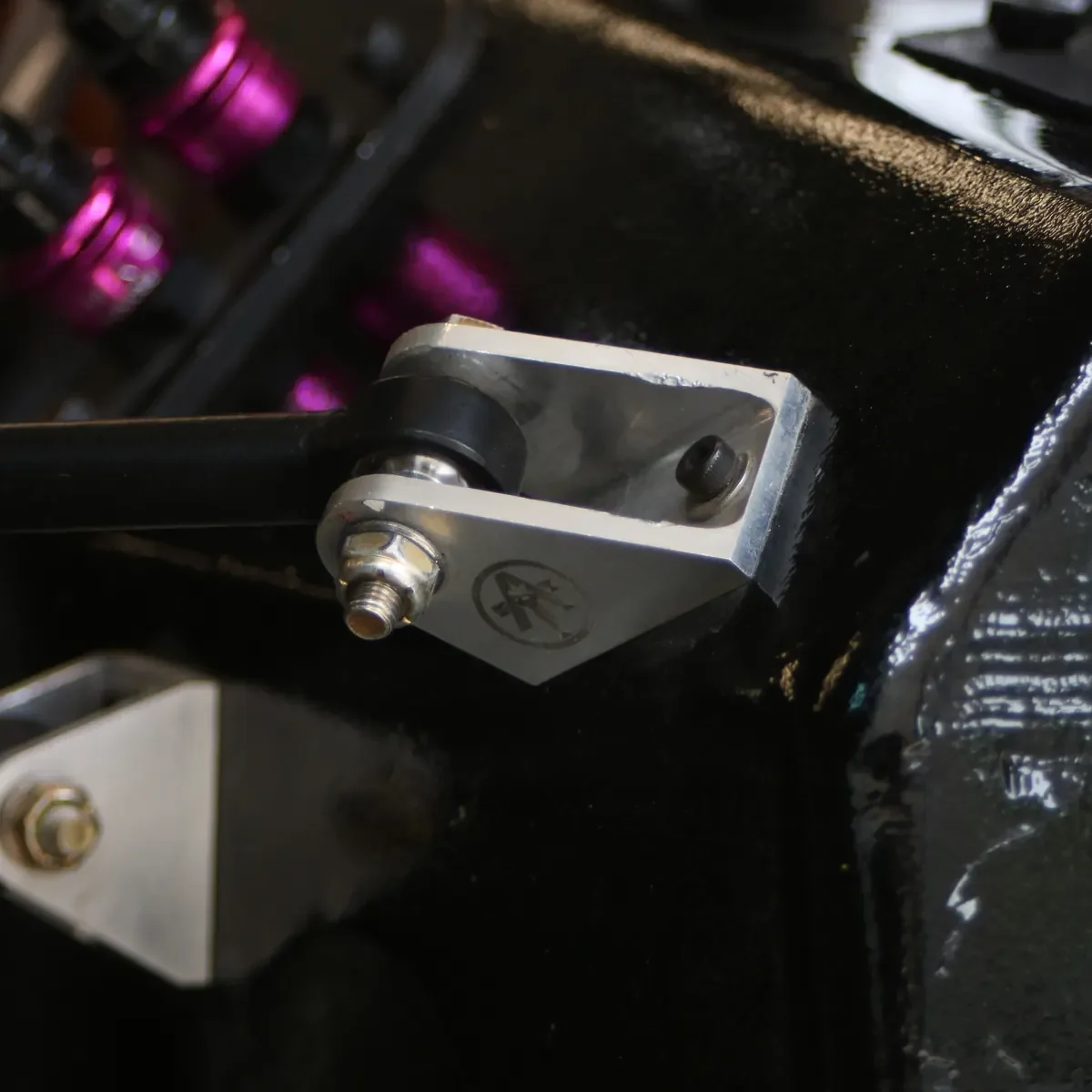
A pushrod clevis and its bracket on the monocoque of the 2026 car

Joining Western Formula Racing’s suspension team creates opportunities to work in a fast paced environment developing one’s toolbox of skills. These skills include learning how to simulate the car in MATLAB, design of every suspension component in SOLIDWORKS, performing a stress analysis on critical components, and hands on manufacturing of components in our machine shop. Then, you will assemble all the components onto the chassis, and finally test the car on the track. This gives the opportunity to optimize the vehicle’s on track set up for various track types and conditions and collect data to improve the design for the following year.

  1. 01

    Four-post rig testing

    Multimatic four-post testing compared damper settings and revealed chassis compliance effects near 6.25 Hz.

  2. 02

    Welding jigs

    3D printed jigs held each bearing seat in place; welded arms measured within a millimetre of CAD.
A pushrod clevis and its bracket on the monocoque of the 2026 car

WFR26E

The assembly

Drag to turn

Changing for 2027

Switching from 13-inch to 10-inch wheels
Entirely new suspension around the new monocoque
New aluminium uprights and spindles, checked with FEA
Dry and wet tyres chosen from tyre test data
Wheel speed sensors for vehicle dynamics data
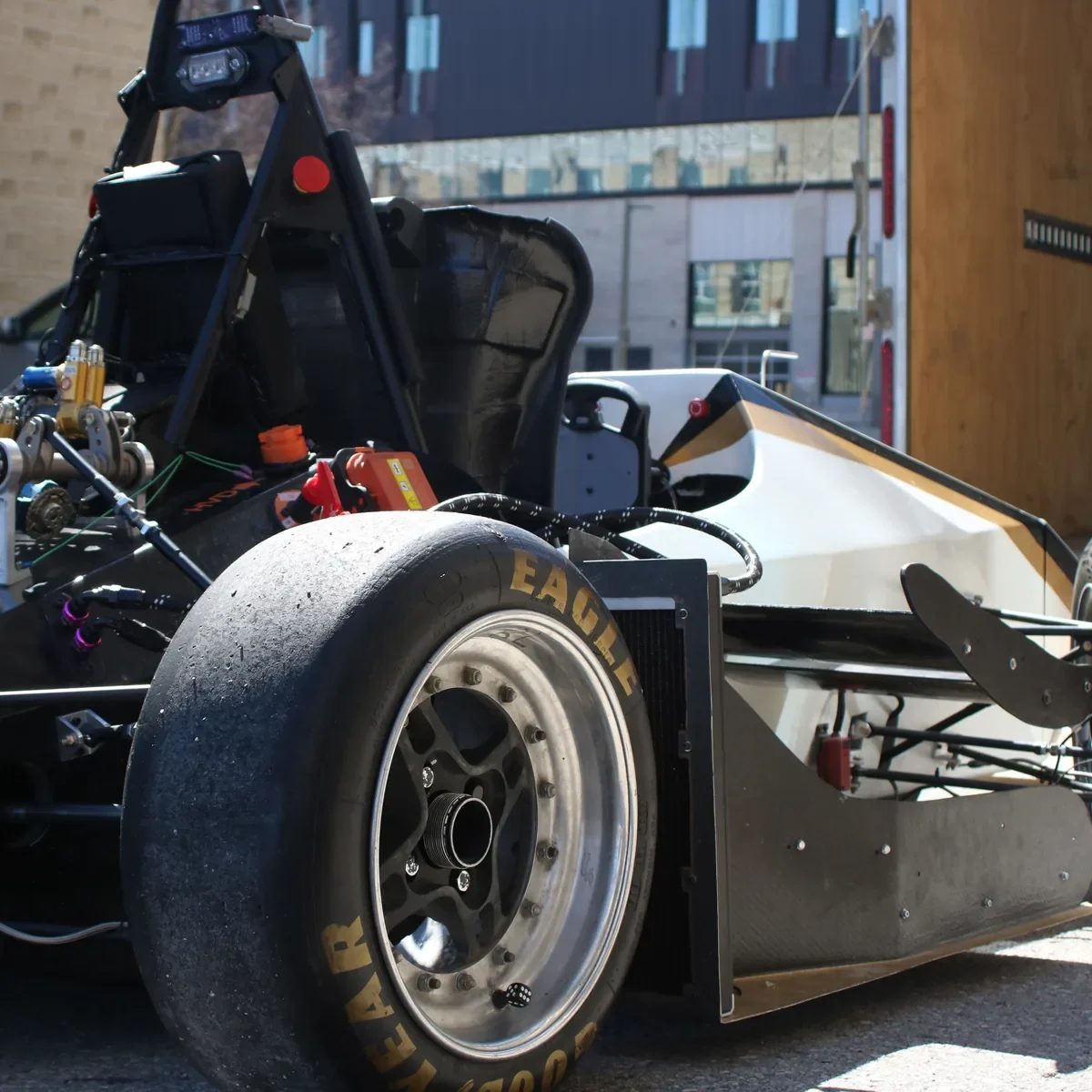
Rear corner of the 2026 car at the shop door: tyre, damper and pushrod

In the making

How it works

The track width, which drivers found more stable near the limit, and the 1550 mm wheelbase were carried over.

Anti-dive and anti-squat went from 0 to 10 percent so pitch behaviour could be studied, and longer jackscrews widened the ride height range for testing softer springs.

Arms were TIG welded in 3D printed jigs and measured to within a millimetre of CAD.

Testing ran on track and on Multimatic's four-post rig, which showed the car needed roughly 12 percent more front and 20 percent more rear damping than expected.

Since 2021 the car has run decoupled heave and roll, which lets the two be tuned independently instead of trading one against the other.

That programme took five years.

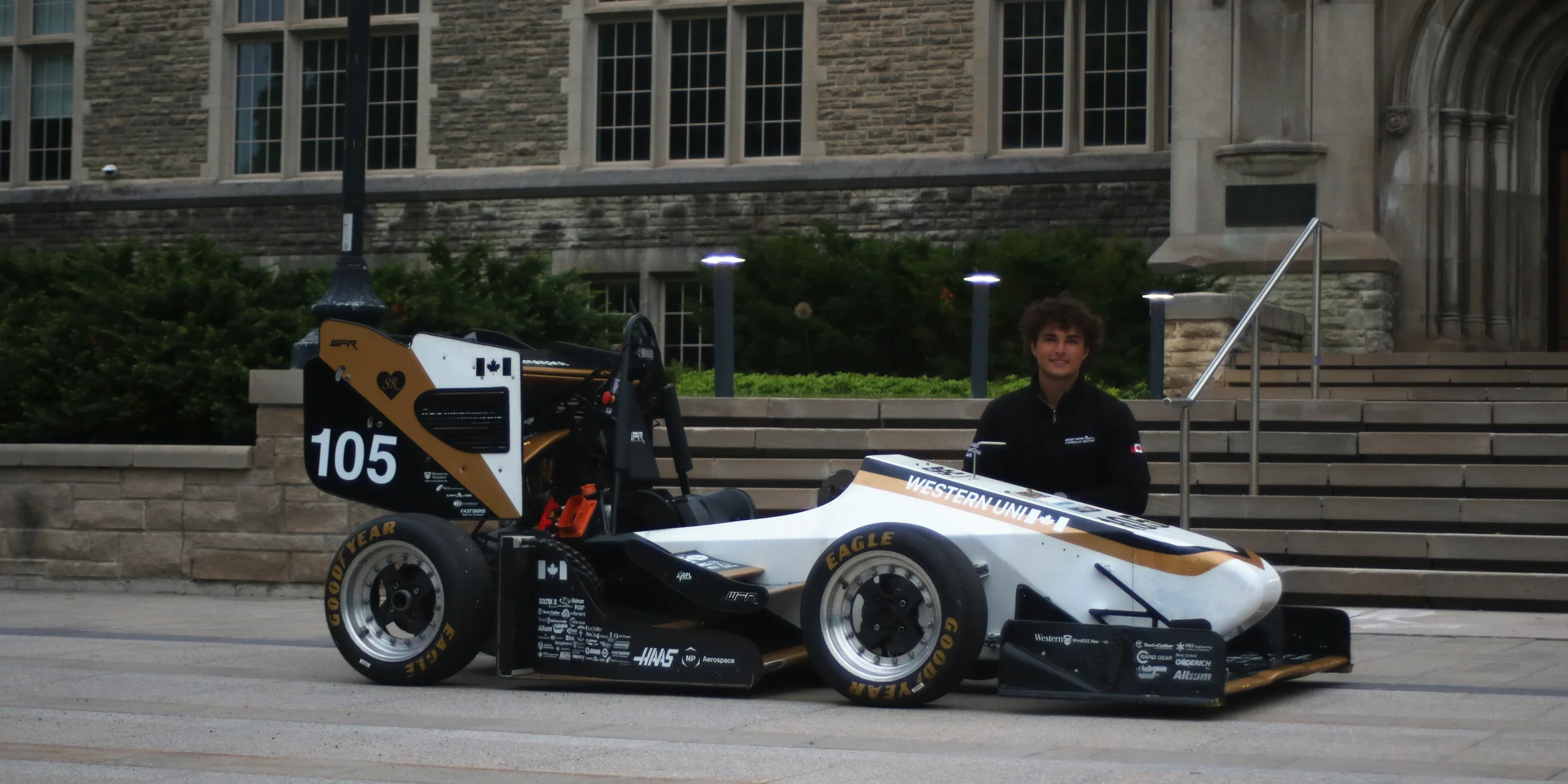
WFR26E, car 105, side-on on a stone plaza in front of stone steps, a team member standing behind it

Build the next one.

Recruitment is open. You do not need to be an engineer or know anything about racing. Bring your curiosity and we will teach you the rest.

Get in touch
Join us

Shopping bag